
About our articles
This guide was developed by the Storm Advocate editorial team, a research-driven group focused on helping homeowners better understand storm damage and the insurance claims process after severe weather events.
Research-Driven Content: Our guides are developed using current, publicly available information from trusted sources, including state insurance regulators, consumer protection agencies, and nationally recognized weather and building-safety organizations.
Accuracy & Compliance: Each guide is reviewed for accuracy, clarity, and compliance prior to publication and updated as new guidance becomes available.
Informational Purpose: This guide is intended for informational purposes only and reflects the most up-to-date research available at the time of publication.
Continuous Updates: If information changes or corrections are needed, updates are made as part of our ongoing editorial review process.
Professional Disclaimer: Storm Advocate is a free educational resource. We are not a law firm, do not provide legal advice, and do not analyze individual insurance claims. Our role is to explain common processes, documentation standards, and consumer protections so people affected by storm damage can make informed decisions during a time that is often stressful, disruptive, and overwhelming.

Michael Mangione is the founder of The Mangione Group, a fractional executive firm that has spent more than twelve years helping companies across the United States with their sales, marketing, operations, and case management, with a particular specialization in legal marketing for plaintiffs’ law firms. He publishes StormAdvocate.org. What you read here is informed by years of working closely with the attorneys, public adjusters, and building consultants who handle first-party property and bad faith claims.
Mike is not a lawyer, and nothing on this site is legal advice. His work here is editorial: translating the statutes, regulations, and policy language that govern storm and first-party property claims into terms homeowners, small business owners, and condominium boards can use. Every article is sourced from primary authorities, dated with a Last Reviewed timestamp, and rewritten in full when the underlying law changes. Mike is also the author of The Unstuck Method, and the editorial voice on this site reflects that book’s premise: the hardest prison to escape is the one we build inside our own minds.
Evidence Rules for Louisiana Hurricane Claims
After a hurricane, it’s normal to feel both relieved to be safe and anxious about what comes next. As you step outside and see pieces of your roof scattered across the lawn, that relief mixes with shock. This guide breaks through that confusion, showing how a hurricane damage lawyer or homeowner can gather the right proof to anchor a Louisiana insurance claim.
Quick Answer
The evidence for Louisiana hurricane damage claims includes dated photos, detailed repair estimates, receipts for mitigation costs, and a clear proof-of-loss statement. Strong documentation ensures insurers evaluate your property accurately and release funds fairly.
Key Takeaways
- Know which documents Louisiana insurers require after a hurricane.
- Organize photos, repair estimates, and receipts before meeting an adjuster.
- Track deadlines under Louisiana Insurance Code Title 22.
- Request written communication whenever claim amounts are disputed.
- Consider professional documentation help if evidence becomes hard to verify.
Under Louisiana law, hurricane damage claims fall under the Louisiana Revised Statutes Title 22, which set timeframes and proof requirements. The statutes require homeowners to submit a sworn “proof of loss” within a specific period—often 60 days after the insurer requests it. These rules apply statewide and are overseen by the Louisiana Department of Insurance (LDI), which enforces fair claim handling standards. According to the LDI, documented evidence—such as photos showing both exterior and interior damage—often serves as primary proof of loss in hurricane-related cases.
Understanding What Counts as Evidence
Insurers rely on tangible, verifiable evidence to decide how much to pay. Evidence includes physical damage photos, weather confirmations, receipts, and expert inspections that tie the loss to hurricane winds rather than preexisting conditions. It’s the difference between “We think the roof leaked” and “Here’s the damage caused by 120 mph winds on August 29.”
You may not have the capacity to collect everything immediately after the storm. That’s okay. The key is to capture what you can safely, then return with better lighting and labeling when conditions improve.
Basic Categories of Hurricane Claim Evidence
- Photographs and videos showing property damage, timestamped where possible.
- Professional repair or replacement estimates from licensed contractors.
- Receipts for emergency mitigation—tarping, drying, temporary housing.
- Insurance policy declarations and previous inspection reports.
- Official agency confirmations, such as FEMA or National Weather Service advisories.
The National Oceanic and Atmospheric Administration (NOAA), the federal agency responsible for tracking weather patterns and maintaining official storm archives, provides certified wind data that insurers often reference. A printout or digital copy of the hurricane’s path at your ZIP code can verify the timing of the loss.
Why Louisiana Evidence Standards Are Different
Louisiana’s claim environment is shaped by state statute and weather frequency. Because hurricanes impact multiple parishes simultaneously, adjusters working under Louisiana Insurance Code Title 22 prioritize clarity and verification. That means less assumption, more tangible documentation.
If you file a claim without sufficient proof, an insurer may delay or dispute it until additional evidence is supplied. This isn’t always malicious—it’s how the law structures their duties. The standard is simple: the claimant bears the burden of proof, but evidence can come from many forms of documentation, not just expert reports.
Common Louisiana-Specific Documentation Standards
- Homeowners must sign a sworn proof-of-loss form when requested.
- Insurers have 30 days to initiate adjustment after notification.
- Policyholders must document mitigation actions to avoid coverage challenges.
- Original receipts should be retained for both insured and out-of-pocket expenses.
These standards serve a shared purpose: to confirm when the hurricane caused the damages and whether losses relate to wind, rain, or flood. Each type of damage follows its own coverage rule, especially if wind and flood coverage are separated between policies.
The Power of Photos and Time Stamps
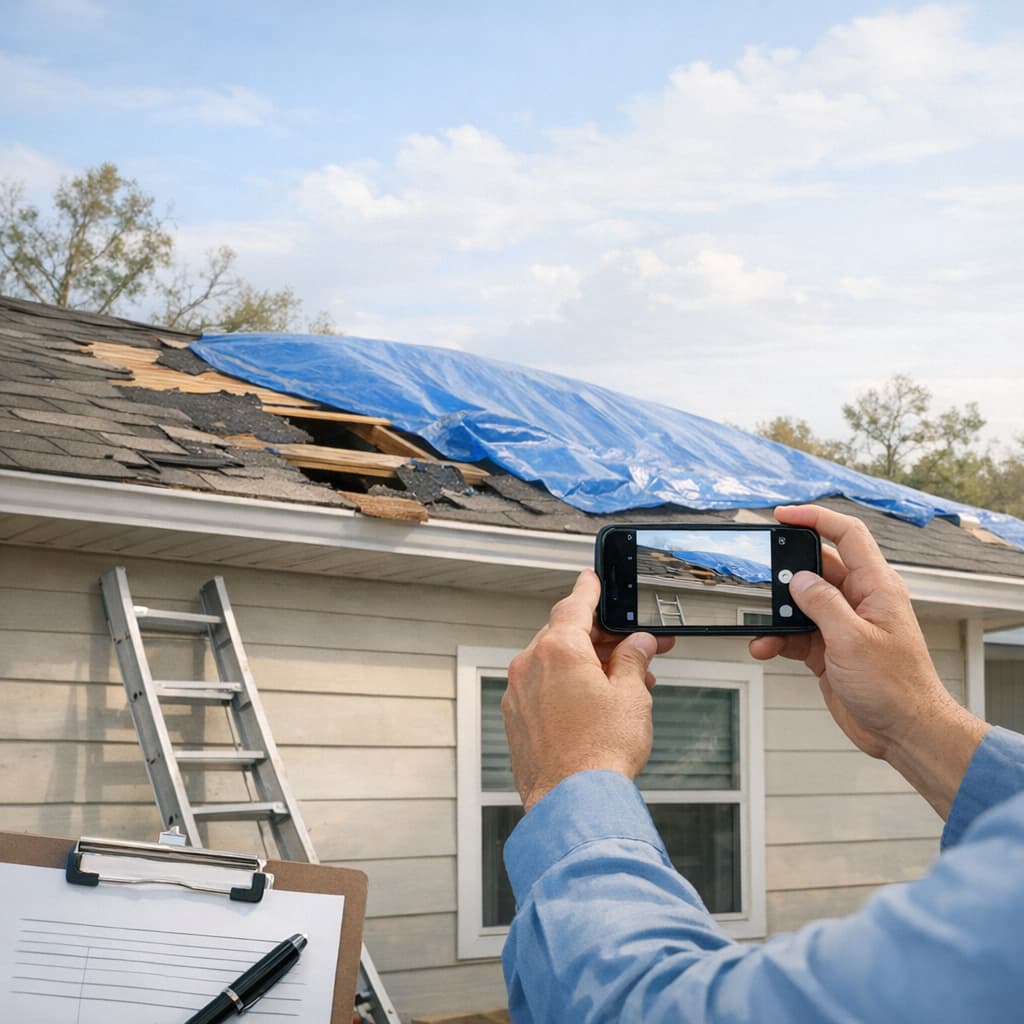
Visual evidence carries immense weight. Adjusters trust what they can see, and photos captured before and after a storm tell a story words rarely can. Use wide shots to show the home in context, then close-ups to detail each impact zone—roof shingles, siding, water lines, or debris patterns.

If power outages prevent you from uploading immediately, back up to multiple sources later—cloud storage, flash drives, even printed contact sheets. Many homeowners rely on smartphone metadata showing automatic date and GPS stamps to authenticate images.
📷 Documentation tip: Store your images in folders labeled “before,” “during,” and “after.” This creates a clear sequence and prevents insurer confusion later.
What Often Surprises Homeowners
When adjusters arrive weeks after the storm, they sometimes ask for details homeowners thought were obvious—like where debris came from or how long power was out. Many people assume insurers already have all those records, but they don’t. Each insurer builds the claim file around what the homeowner provides.
One homeowner in Lake Charles shared how their adjuster asked for proof that flooring damage wasn’t from preexisting plumbing leaks. Because she had a photo from two days before the storm showing dry baseboards, the dispute ended quickly. That single timestamp saved weeks of delay.
Lessons From Real-World Claims
- Even minor details can decide claim outcomes.
- Keep evidence labeled, dated, and cross-referenced with receipts.
- Never assume your adjuster already knows your property layout.
People Also Ask
How soon do I need to collect hurricane damage evidence?
Collect photos and notes as soon as it’s safe to reenter your home. Delayed documentation often weakens claim credibility.
What if I lost receipts in the storm?
Ask vendors or banks to reissue transaction records. Many insurers accept duplicates if you explain circumstances clearly.
Can neighbors’ photos help my claim?
Yes. Neighboring property photos often verify wind patterns and timing, building stronger weather correlation evidence.
Proof-of-Loss and Supporting Documents
The proof-of-loss form serves as your sworn statement describing what was damaged and its estimated value. In Louisiana, once your insurer requests this document, you generally have 60 days to submit it. This countdown begins the moment the request is made in writing.
Filing a hurricane insurance claimrequires cross-checking your personal inventory, contractor estimates, and photographic evidence. Missing figures can prompt repeated requests for clarification, delaying claim settlement. Treat it like both a declaration and an index of your evidence folder.
Documents to Attach With Proof-of-Loss
- Contractor estimates or invoices stating date and scope of repairs.
- Photos annotated or described by location and date.
- Weather verification from recognized sources like NOAA or FEMA.
- Original receipts for mitigation and temporary accommodations.
⚠️ Common mistake: Submitting a proof-of-loss without documentation attached. Insurers evaluate form statements as credible only when backed by evidence they can verify.
The Role of Weather Verification
Insurers rarely rely only on homeowner photos. They compare your claim timing with regional storm data from the National Hurricane Center and certified NOAA maps. These records confirm wind speed, rainfall totals, and outage areas—crucial when separating wind-driven rain from flood exposure.
The Federal Emergency Management Agency (FEMA), the federal office responsible for disaster assistance and public infrastructure recovery, also releases post-storm disaster declarations that define official impact zones. Including FEMA disaster declaration numbers in your claim notes strengthens wind versus flood arguments and may influence what expenses qualify for reimbursement.
Typical Weather-Based Evidence Types
| Evidence Type | Purpose |
|---|---|
| NOAA or National Weather Service storm data | Validates weather conditions on the loss date |
| FEMA disaster declaration ID | Confirms disaster location under federal assistance scope |
| Local outage notices | Support proof of extended exposure or mitigation efforts |
Documenting Temporary Repairs and Mitigation
After a hurricane, emergency measures often begin before insurance adjusters arrive. You may hire contractors to tarp roofs, dry carpets, or secure power. Every invoice, text confirmation, or material receipt is evidence that you acted responsibly to prevent further loss—something Louisiana law expects from every policyholder.
Track details in a notebook or spreadsheet. Write who did what, when they arrived, and what areas they touched. Be specific. Insurers need to verify that mitigation work addressed hurricane-related damage, not later deterioration.
Checklist for Mitigation Evidence
- Save all contractor estimates, even cancelled ones.
- Label receipts by date and repair type.
- Photograph each mitigation step before and after completion.
- Add contractor license numbers where possible.
- Record any phone call notes regarding claim instructions.
📌 Key note: These records demonstrate your duty to minimize additional loss, an obligation written into most Louisiana property insurance contracts.
How a Hurricane Damage Attorney Can Support Documentation
Some homeowners reach a point where organization alone isn’t enough. A local hurricane damage attorney can structure your documentation in a way insurers immediately recognize as complete, preventing repetitive information requests. While Storm Advocate doesn’t provide legal services, professional legal counsel can help interpret gray areas, especially around claims with both wind and flood impacts.
Many homeowners choose this path after repeated claim delays or low settlement offers. The attorney doesn’t replace your documentation role—they refine it, ensuring every photo, invoice, and written statement aligns under Louisiana Insurance Code standards.
Situations Where Legal Help Becomes Useful
- When insurers dispute the cause of damage.
- When deadlines were missed due to displacement or lack of notice.
- When documentation was lost and needs reconstruction from secondary sources.
Filing a hurricane insurance claim effectively requires keeping your documents aligned to Louisiana’s timeframes, ensuring your evidence tells the complete story insurers need.
In This Section
This continuation explores advanced documentation techniques for Louisiana hurricane claims—how to prove roof, interior, and structural losses, manage insurer communication, and safeguard evidence until resolution. It closes with FAQs and trauma-informed next steps.
As part one outlined the immediate steps after a Louisiana hurricane, many survivors reach this next stage still unsure how to assemble complete evidence. Now the focus shifts to maintaining credibility through detailed, organized proof that withstands insurer review.
Ensuring your documentation meets Louisiana evidence standards
Louisiana’s Insurance Code, under La. R.S. §22:1892, requires insurers to evaluate claims based on timely, verifiable evidence. Meeting those standards is about showing sequence and cause—pictures, receipts, and statements that align in time and detail.
- Record when each damage was first noticed.
- Keep physical proofs consistent with weather reports or emergency orders.
- Include both before-and-after visuals whenever possible.
- Store scans securely and create backup copies offline.
Louisiana hurricane insurance claim essential documentation steps are crucial for a homeowner who can trace every record—from temporary tarping costs to interior water staining—builds a clear picture. When an insurer reviews that picture under Louisiana law, proof of continuous control over the evidence often limits disputes about timing or cause.
Organizing your proof of loss packet
Your “proof of loss” is the foundation document verifying the damage amount you claim. It must summarize the loss under oath if requested, usually within 60 days of the insurer’s first demand under Louisiana Revised Statute §22:1892(A)(3).
The key elements of a complete submission
- A sworn proof-of-loss form (available from your insurer).
- Receipts for emergency mitigation and temporary repairs.
- Quotes or invoices from licensed Louisiana contractors.
- Independent estimates, showing material type and labor rates.
- Photographs showing progressive stages of damage cleanup.
When these elements align, the insurer can verify replacement cost value or depreciation calculations faster. If anything is missing, delays occur. Many Louisiana homeowners find that laying out all papers as a physical timeline helps see what may still need documenting.
Building a timeline of evidence
The more clearly your documentation shows sequence, the less room an insurer has to argue about causation. A concise timeline attached to your claim submission shows diligence and transparency.
Example timeline layout for hurricane documentation
| Day | Action | Evidence Type |
|---|---|---|
| Day 1–2 | Initial photographs of roof and interior | Digital photos with time stamps |
| Day 3–5 | Temporary repairs and receipts | Store paper receipts and digital copies |
| Day 6–14 | Professional inspection and estimate | Inspector’s written report and signature |
| Day 15+ | Insurance correspondence | Email confirmations and notes by date |
The Louisiana Department of Insurance, the state agency regulating insurer conduct, maintains complaint and guidance data used to enforce the statute’s time limits for proof review and payment. Keeping your documents aligned to those timeframes supports your claim’s integrity under LDI oversight.
Evidence for roof, siding, and window damage
Wind damage leaves visible patterns that Louisiana adjusters recognize. Granule loss in shingles, lifted flashing, and missing ridge caps should be photographed at multiple angles. Siding cracks often appear on windward corners first.
- Photograph entire elevations, not just close-ups.
- Use notes or chalk arrows (non-damaging) to mark spots before re-inspection.
- Retain any dislodged parts for possible forensic review.
Window and door leaks can confuse claims—was it floodwater or rain intrusion? Describe the color, odor, and direction of flow in writing. Louisiana insurers often ask for these distinctions when applying coverage limits between wind-driven rain and flooding exclusions.
Interior and contents losses
Inside your home, evidence gets personal. Document gently. The camera can trigger grief, especially when recording family belongings. Pause if needed. Trauma-informed recovery allows emotional breathing room between tasks.
- Group similar items together—furniture, electronics, clothing.
- Calculate approximate replacement or cleaning costs with store screenshots.
- Label photos with each room name and date taken.
- Save item lists in both paper and digital formats.
FEMA, the federal emergency agency, coordinates disaster guidelines for these listings through its Individual Assistance program. FEMA, the national agency responsible for supporting citizens after natural disasters, provides publicly accessible checklists on item-level loss documentation that complement private insurance claims.
Condo association and shared property claims
When property lies under a condominium association, evidence must prove where common damage ends and personal-unit damage begins. Louisiana’s Condominium Act under La. R.S. §9:1123.112(A) clarifies this split: structure vs. contents.
- Photograph shared exterior walls, stairways, and roofing transitions.
- Request your association’s master policy and recent inspection logs.
- Create separate folders for association insurance and personal policies.
If you’re coordinating with a condo association insurance claim attorney, having labeled folders prevents duplication or cross-claim disputes later. The clearer your evidence allocation, the faster both insurers can settle overlapping segments.
When to supplement or clarify your file
An adjuster may contact you weeks after the first inspection requesting extra proof, such as new photos or receipts. You may also notice costs that didn’t appear in your initial proof of loss form. Louisiana law allows reasonable supplementation before final settlement.
Simple steps for updating evidence
- Use sequential file names—Photo_001, Photo_002—for new uploads.
- Mark “supplemental submission” in subject lines or email headers.
- Attach a one-page summary explaining what’s new.
This prevents confusion between initial and later evidence batches. Transparent updates reduce insurer frustration and demonstrate your organized participation in the claim review process.
Where documentation falls short
Many Louisiana survivors later realize that informal texts or fragmented receipts slowed their payments. In interviews with multiple public adjusters across parishes, a pattern emerged: homeowners who relied only on contractor statements often faced verification requests that added weeks of waiting.
Common shortfalls include:
- Missing timestamps on photos.
- Unclear labeling of repair receipts.
- Lack of note linking item cost to the exact damaged room.
A simple nightly routine—upload new images, label once, and back up to cloud storage—can turn a chaotic record pile into reconstructable evidence that a hurricane damage lawyer can use later if the claim becomes contested.
What adjusters commonly ask for later
Adjusters have patterns. After big storms, they often return requesting details tied to three themes: proof of timing, mitigation steps, and invoices matching policy wording.
- “Can you show the roof’s pre-storm condition?” – Provide older real estate or Google Street View screenshots.
- “Can you document who performed emergency work?” – Signed contractor receipts or digital payments help.
- “Do you have temporary housing expenses?” – Include hotel bills and meal receipts marked by date range.
This may feel repetitive, but supplying what’s asked helps maintain claim momentum. Each clarifying piece strengthens credibility and reduces risk of a low settlement offer under the insurer’s damage valuation methods.
Preserving evidence under Louisiana weather conditions
High humidity and heat degrade paper fast. Keep original receipts in waterproof pouches. Use silica packets or sealed plastic containers. For large batches, digitize within the first week.
- Protect devices storing evidence with surge protectors.
- Keep duplicate copies on a USB drive in another location.
- Print the inventory summary so it’s accessible without electronics.
Insurance investigators often commend homeowners whose evidence remains legible months later. It signals care—and care often translates into credibility under Louisiana’s claim reasonableness review standards.
The role of expert inspections and third-party reports
Independent engineers, roofing specialists, or leak detection experts can add technical depth to your file. Their reports may confirm wind direction, material failure, or moisture readings within walls. These details assist insurers when separating storm-related loss from wear.
Many policyholders hesitate to hire experts due to cost. Consider this only when a dispute arises or when your insurer questions causation. Louisiana’s regulatory code allows these supplementary findings to accompany your proof-of-loss package without waiving policy rights.
Before vs. after report comparison table
| Report Type | When Useful | Core Value |
|---|---|---|
| Before-storm inspection | Owned homes with recent appraisal | Baseline structural health proof |
| After-storm engineering report | Questionable wind vs. flood cases | Confirms physical cause of failure |
Keeping both reports in your claim file speeds dispute resolution under Louisiana Department of Insurance guidelines for catastrophic event claims published in Bulletin 2020-03 (updated 2022).
Maintaining communication transparency with insurers
You may want to track every phone call and message with timestamps. This not only protects you but creates an official record that aligns with Louisiana’s 30-day response rule for post-calamity claims under La. R.S. §22:1973.
- Write dates and names after each call.
- Summarize any verbal commitments in an email to confirm understanding.
- Store insurer letters or texts in a single chronological thread.
If response gaps extend beyond statutory limits, you can file an inquiry through the Louisiana Department of Insurance Consumer Services Division. Usually, such notification prompts faster movement on long-pending files.
People Also Ask
What should Louisiana homeowners document first after a hurricane?
Take dated, wide-angled photos of roof, interior, and yard debris within the first 48 hours, then list items needing repair or replacement.
Does a proof of loss require notarization in Louisiana?
Yes, when requested by the insurer, the proof of loss must be sworn or notarized as part of formal hurricane damage claim evidence.
How long do Louisiana insurers have to respond to hurricane claims?
Under state law, insurers typically must begin adjustment within 14 days and pay undisputed amounts within 30 days after proof submission.
Empowered handling of claim setbacks
Many people who experienced abuse, trauma, or disaster stress feel paralyzed when another authority questions their honesty about losses. This reaction is normal. If that feeling returns during claim edits or disputes, take breaks. Documentation can happen in small segments.
Write notes in plain language. “Water reached this wall,” carries the same weight as technical descriptions. A hurricane damage lawyer can later translate it into legal format if disputes rise, but your lived accuracy builds the base.
- Capture feelings of sequence—what you saw first, next, and later.
- Note smells or sounds after the storm—details often prove moisture duration.
- Indicate neighbor witnesses or shared experiences when relevant.
Conditional next steps if progress stalls
You may want to contact a hurricane damage lawyer when repeated evidence requests, unexplained delays, or loss underpayment patterns appear. Louisiana residents often start with free consultations to gauge whether their documentation already meets standards or needs supplementing.
If you handle the claim yourself, submit an organized summary to the insurer every three weeks until you receive written updates. This signals diligence while protecting your right to pursue mediation or further review later if necessary.
Key takeaways before closing your claim
- Your evidence tells the story insurers must read—make each piece factual and dated.
- Follow Louisiana timeframes for proof submissions and insurer replies.
- Group materials by category: structural, interior, expense, and correspondence.
- Preserve originals safely and create both physical and digital backups.
- Reach out for advocacy support if confusion or emotional fatigue interrupts completion.
Frequently Asked Questions
What counts as acceptable proof of loss for Louisiana hurricane damage?
An acceptable proof includes a sworn statement listing damaged property, repair estimates, and photographic evidence. Louisiana insurers use it to verify actual cash value and settlement calculations under Title 22 protections.
Can digital photos replace printed ones during claim submission?
Yes. High-quality digital photos with visible timestamps are sufficient under Louisiana Department of Insurance standards, provided they are stored securely and consistent with your other documentation forms.
Are flood damages handled differently from wind damages?
Yes. Flood losses typically fall under the National Flood Insurance Program, while wind losses remain with private insurers. Keeping separate folders for each helps prove cause and avoid coverage confusion.
Do I need professional estimates for every repair?
Not always. Minor self-repairs need receipts and clear evidence, but major or disputed damage often benefits from licensed contractor estimates to support insurer valuation accuracy.
How can trauma affect how I document losses?
Survivors may avoid visual reminders of destruction. Taking photos in short sessions or with trusted helpers can reduce overwhelm while still providing the documentation necessary for fair claim handling.
Closing reflection and survivor empowerment
Documenting hurricane damage in Louisiana is demanding physical and emotional work. Each receipt, photo, and dated note is a small act of rebuilding control after chaos. You are not proving worth; you are preserving your story in factual form.
Many people who have experienced violence or displacement describe similar fatigue when faced with paperwork. Take time to rest between steps. Safety and clarity grow together when you move at your own pace.
When your documentation feels whole and well-ordered, confidence returns. Whether or not you engage a hurricane damage lawyer, your diligence shapes the fairness of the process ahead. That diligence—your own—matters most.

Additional Resources
For more information and support resources, visit our Resources Page.
References
- Louisiana Department of Insurance. (2025). Filing a Property Insurance Claim After a Disaster. Retrieved from https://ldi.la.gov/consumer-services/disaster-claims
- Louisiana Revised Statutes Title 22. (2024). Insurance Code. Retrieved from https://legis.la.gov/Legis/Law.aspx?d=103285
- Federal Emergency Management Agency. (2025). Disaster Assistance Program Overview. Retrieved from https://www.fema.gov/disaster-assistance-overview
- National Flood Insurance Program. (2025). Understanding Flood Claims. Retrieved from https://www.floodsmart.gov/how-do-i-start-my-flood-claim
- National Hurricane Center (NOAA). (2025). Hurricane Archives. Retrieved from https://www.nhc.noaa.gov/data/
- Insurance Information Institute. (2025). Facts + Statistics: Hurricanes. Retrieved from https://www.iii.org/fact-statistic/facts-statistics-hurricanes
- National Association of Insurance Commissioners. (2025). Consumer Guide to Homeowners Insurance. Retrieved from https://content.naic.org/consumer-guides/homeowners-insurance
- Institute for Business & Home Safety. (2025). Strengthening Homes Against Wind. Retrieved from https://ibhs.org/risk-mitigation/strengthening-homes-wind/
- Louisiana Governor’s Office of Homeland Security and Emergency Preparedness. (2025). Hurricane Recovery Resources. Retrieved from https://gohsep.la.gov/Pages/Hurricane-Resources
- Consumer Financial Protection Bureau. (2025). Protecting Your Finances During Emergency Recovery. Retrieved from https://www.consumerfinance.gov/coronavirus/mortgage-and-housing-assistance/disaster-recovery/