
Storm Damage Insurance Claim Louisiana Guide
When a hurricane tears through a community, it rearranges more than rooftops. Lives pause, routines fray, and next steps blur. This guide offers clarity for every storm survivor in Louisiana—especially those now facing the difficult process of insurance recovery.
Under Louisiana’s unique insurance laws, property owners have critical rights and timelines to follow when filing storm damage claims. This article provides clear next steps, grounded in verified guidance and framed with compassion.
Understanding Louisiana’s storm claim rules
Louisiana law requires insurers to begin loss adjustment within fourteen days after a homeowner submits a written claim notice (La. R.S. §22:1892, 2023). The state’s Department of Insurance also reminds policyholders that insurers must pay undisputed claims within thirty days once proof of loss is provided. These protections exist to support homeowners after declared catastrophes.
A foundational overview of evidence requirements reinforces that timely documentation is the key to applying these rights effectively. It emphasizes practical evidence steps rather than legal jargon—vital when stress clouds clear thinking.
First steps for property owners after a storm
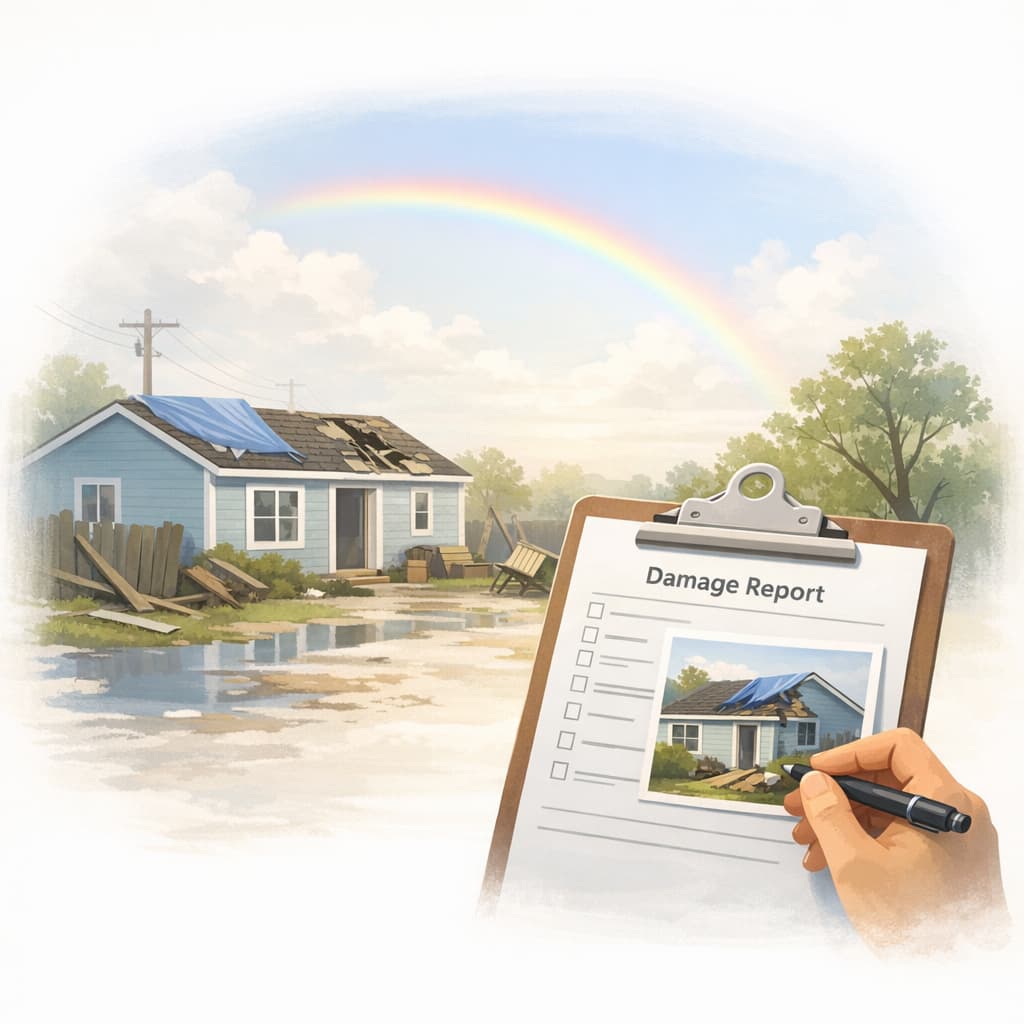
Safety comes first. Once safe to enter, take comprehensive photographs of all visible damage. Save receipts for emergency repairs. Keep digital and printed copies. Experts from the Insurance Information Institute (2024) note that early documentation minimizes disputes later.
Here’s what every storm-impacted household should do:
- Photograph all property damage before cleanup.
- List every damaged item and its estimated value.
- Store proof of ownership—bills, appraisals, receipts.
- Notify both insurer and mortgage servicer promptly.
- Avoid permanent repairs until inspection is done.
Following these actions forms a credible claim file. Many of these steps build directly upon principles detailed in Louisiana hurricane evidence guides available to residents statewide.
Filing your claim with a calm, structured approach
Storm survivors often describe claim phone calls as emotional minefields. Keeping a written log helps. Note the company representative’s name, date, and summary of every exchange. Store these notes with claim correspondence for consistency.
Louisiana’s Department of Insurance issued data in 2024 showing that 67% of homeowners who provided detailed written documentation received faster partial payments than those who reported damage by phone alone. Maintaining order now can shorten stress later.
If disputes arise, refer to key documentation standards for hurricane losses. This information helps homeowners align their claims with state-recognized expectations, often leading to better claim outcomes.
Rebuilding trust and transparency
Trust feels fragile after damage. Yet each piece of documentation rebuilds it—photo by photo, list by list. Licensed Louisiana public adjusters explain that the best claims depend on evidence consistency, not volume. Organized documentation carries persuasive weight under policy reviews.
The Insurance Institute for Business and Home Safety’s 2023 report confirmed that meticulous documentation reduced claim processing time by an average of 28%. A study like this reassures storm survivors that steady effort pays off practically.
When rebuilding begins, stay mindful of permit requirements under your parish’s building codes. Verified compliance with the International Code Council standards often expedites final inspection approvals.
Staying emotionally grounded through the claims journey
Paperwork can’t describe loss—but organization provides agency. Mental health professionals in Louisiana emphasize that structured routine during post-storm recovery supports emotional stability. Simple steps, such as setting daily small goals for your claim file, help regain control after chaos.
Resources like the comprehensive hurricane documentation framework offer reassurance that recovery is possible, one step at a time. With guidance grounded in Louisiana law, every property owner can reclaim both their space and sense of security.
- Set short daily tasks—organize five documents, photograph one area.
- Take regular rest breaks; recovery isn’t a race.
- Reach out to trusted advocates when overwhelmed.
- Remember: A slower pace is still progress.
Case spotlight: When preparation paid off
One Baton Rouge homeowner meticulously followed this documentation process after a 2023 storm. Their insurer initially questioned roof damage coverage. Because the homeowner saved clear timestamps, correspondence logs, and receipts, arbitration resolved the dispute within weeks. This illustrates how preparation—rooted in evidence standards—translates to fairer outcomes.
Each step, while slow, builds toward resolution. Louisiana’s protective framework supports documented persistence. Survivors who track details find empowerment amid disruption.
Evidence requirements for Louisiana hurricane damage claims (pillar article)

Additional Resources
For more information and support resources, visit our Resources Page.
References
Insurance Information Institute. (2024). Facts + Statistics: Hurricanes. Retrieved from https://www.iii.org
Louisiana Department of Insurance. (2023). Homeowners’ Claims Process for Catastrophe Events. Retrieved from https://www.ldi.la.gov
Insurance Institute for Business and Home Safety. (2023). Post-Disaster Recovery Studies. Retrieved from https://ibhs.org
National Flood Insurance Program. (2024). Understanding Proof of Loss Requirements. Retrieved from https://www.floodsmart.gov
International Code Council. (2023). Louisiana Building Code Updates. Retrieved from https://www.iccsafe.org