
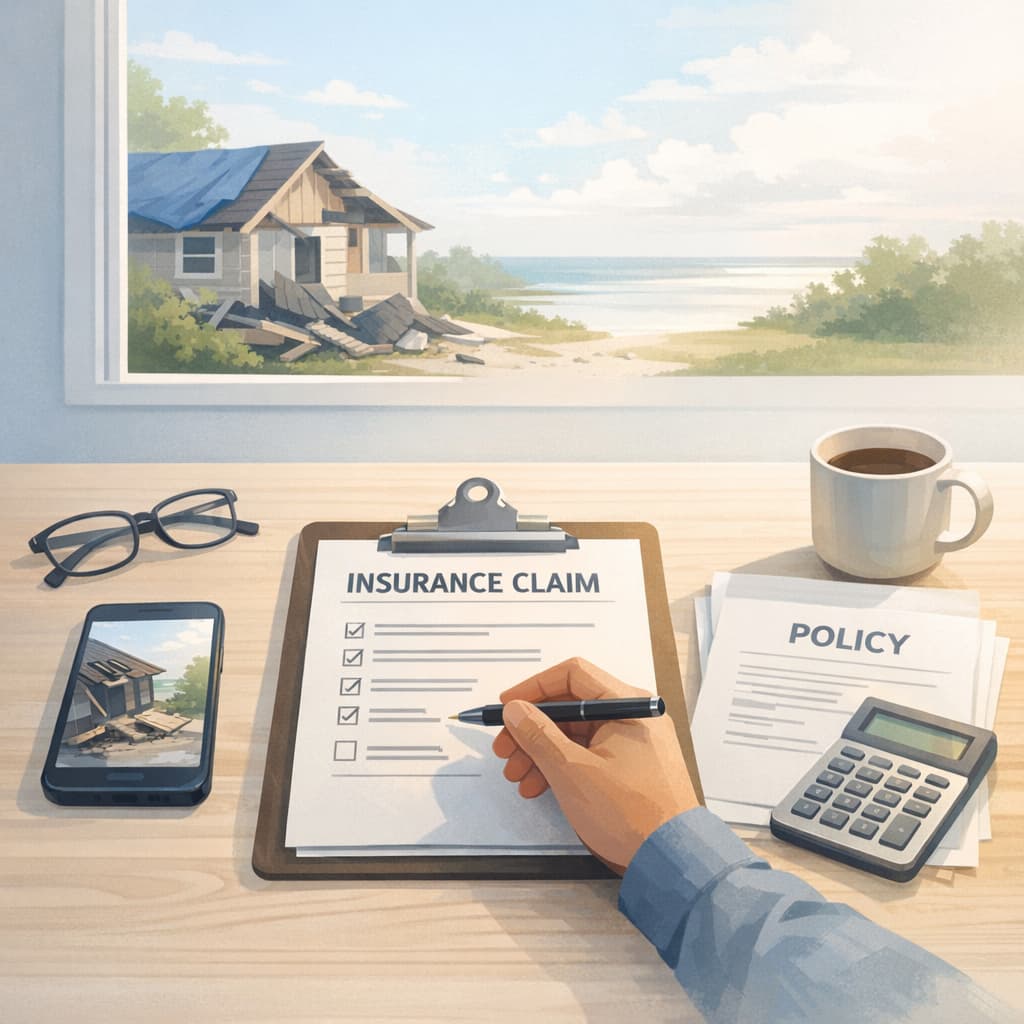
Louisiana Storm Damage Insurance Claim Guide
When a hurricane upends your home, it alters more than walls and roofs. It shifts safety, routines, and emotions. This guide helps every homeowner or storm survivor in Louisiana take calm, grounded next steps after the storm.
Within Louisiana jurisdiction, insurance claims handling is governed by the Louisiana Revised Statutes §§22:1892 and 22:1973 (2024). These laws protect policyholders from unfair delays and outline timeframes for insurer response. The steps below align with those standards and practical recommendations from the Louisiana Department of Insurance (LDI).
Understanding Your Coverage Before Filing a Storm Damage Claim
After hurricanes, a property owner often faces confusion over what their policy truly covers. Reviewing policy declarations, exclusions, and deductibles early helps clarify your options. Storm-impacted households may reference core documentation principles noted in Louisiana evidence requirements to understand what proof strengthens their file. These steps include photographing each damaged area, keeping all receipts, and maintaining timelines for every expense.
In 2023, the Louisiana Department of Insurance reported over 67% of storm-related complaints involved delays or documentation disputes (LDI, 2023). Proper records shorten resolution times.
Documenting and Preserving Evidence After the Storm
A person affected by the storm must balance safety and thoroughness. Begin documentation once the home is safe to enter. FEMA recommends creating a room-by-room record of all losses. Each image should include date, description, and context. Handwritten logs are acceptable when digital tools are unavailable.
- Photograph structural damage and water lines.
- Keep invoices for all emergency repairs.
- Note communications with adjusters by date.
- Store files both physically and digitally.
As detailed in this foundational Louisiana evidence guide, timely notes and consistent file storage significantly improve outcomes. Independent adjusters confirm that claims supported by timestamped photos see faster settlements across the parishes affected by Hurricane Ida.
Filing the Claim: Steps and Timelines
Every policyholder in Louisiana must notify their insurer as soon as possible—ideally within days of discovering damage. According to the Louisiana Administrative Code, insurers must acknowledge claims within 15 days. The claim should include your contact details, policy number, and a short factual summary of losses.
Understanding deadlines is key. Insurers generally have 30 days after receiving satisfactory proof of loss to tender payment. To prepare, align your documentation with the key principles explained here about proof evidence structure. Properly formatted documentation supports faster review by claims examiners and mitigates disputes.
- Submit claim via insurer’s preferred channel (portal, email, or mail).
- Retain confirmation numbers or acknowledgment letters.
- Follow up weekly with notes on all contacts.
- Track every repair phase completion date.
Data from the National Association of Insurance Commissioners (NAIC, 2024) shows Louisiana insurers closed 92% of hurricane claims within one year when documentation met statutory proof standards.
Working with Adjusters and Contractors
Licensed adjusters assess losses on behalf of insurers, yet communication can be complex during widespread recovery. The property owner benefits from written summaries after each meeting. Request copies of any reports referencing coverage decisions or repair scopes. Keep these together with itemized contractor estimates.
Independent building scientists from the Insurance Institute for Business & Home Safety emphasize aligning repair plans with current building codes. Louisiana adopted updated standards in 2023, strengthening roof fastening and flood resistance requirements. Contractors must comply with the 2023 International Residential Code as enforced locally.
Referencing key documentation practices ensures consistency between evidence collected and estimates prepared. This minimizes disputes about pre-existing versus storm-caused damage.
When Problems Arise: Consumer Resources and Formal Complaints
Louisiana homeowners have the right to fair claim handling. If delays exceed statutory limits or communication ceases, policyholders can file a formal complaint with the Louisiana Department of Insurance using its Consumer Complaint Form. The department may investigate insurer practices and request proof of timely acknowledgment.
Public adjusters may assist storm survivors in organizing documentation or negotiating settlements. However, ensure the adjuster is licensed in Louisiana; unlicensed assistance can expose households to fraud risks. The NAIC encourages verification through the state license lookup.
Case studies compiled by local civil legal aid programs show that households who meticulously followed evidence-handling guidance achieved successful reinspections and adjustments without litigation. That evidence-first approach restored momentum for storm-impacted families across coastal parishes.
Staying Grounded Through the Recovery Process
Claim recovery requires patience and organization. Even when processing lags, small steps toward documentation keep power in the homeowner’s hands. Safe housing, health, and community support remain equally vital. Understanding procedural timelines can reduce uncertainty and emotional strain during this complex period.
Key Takeaways for Storm-Impacted Families
- Know Louisiana’s statutory deadlines: acknowledgment in 15 days, payment within 30.
- Photograph, log, and store all storm-related documents.
- Keep a record of every adjuster or contractor meeting.
- Seek support from LDI or licensed professionals when needed.
- Use consistent documentation methods to strengthen claims.
Each step restores control after chaos. Insurance rules exist to protect—not burden—the policyholder. By following the structured, trauma-aware process set out here, every storm-impacted household can navigate recovery with clarity.

Additional Resources
For more information and support resources, visit our Resources Page.
References
Louisiana Department of Insurance. (2023). Storm Claim Complaints Overview. Retrieved from https://www.ldi.la.gov/onlineservices/ConsumerComplaintForm
National Association of Insurance Commissioners. (2024). Hurricane claim closure data by state. Retrieved from https://www.jjclaw.com/hurricane-claims/storm-center/
Insurance Institute for Business & Home Safety. (2023). Building Code Adoption and Enforcement Trends. Retrieved from https://southernhomeimprovement.com/storm-insurance-guide-for-roof-damage-in-louisiana-and-mississippi/
FEMA. (2024). Disaster Recovery Documentation Guidance. Retrieved from https://www.dalyblack.com/how-to-file-an-insurance-claim-for-storm-damage/
Insurance Information Institute. (2023). Homeowners insurance and hurricane protection. Retrieved from https://www.bloomlegal.com/blog/how-to-file-a-hurricane-property-damage-insurance-claim/