

How to Properly Document Hail Damage in Minnesota
In the wake of a hailstorm, confusion can feel overwhelming. Turning that uncertainty into clear action helps restore stability and control. This guide translates that urgency into calm, step-by-step direction for Minnesota homeowners, commercial property managers, and storm survivors.
Under Minnesota law, especially Minn. Stat. § 72A.20 concerning unfair claim practices (2023), insurers must handle every property damage claim fairly. Understanding your documentation rights protects you as a policyholder. This article offers information only, not legal advice, and reflects Minnesota jurisdiction.
Why a Hail Damage Attorney Helps Early
A qualified hail damage attorney understands both legal protections and the technical aspects of storm verification. Early consultation ensures documentation meets insurer standards before disputes arise. Legal advocates like attorney John M. Greene, Esq., specialize in storm damage claims and can explain what evidence courts typically find credible.
In Minnesota’s record-setting hail season of 2023, the National Weather Service Twin Cities Office noted over 120 large-hail events. That data shows how vital it is for every storm-impacted household to have solid evidence ready. If confusion sets in, reviewing the Minnesota homeowners: Hail damage documentation checklist can clarify what insurers look for in your first 24 hours post-storm.
Step 1: Begin Documentation Safely
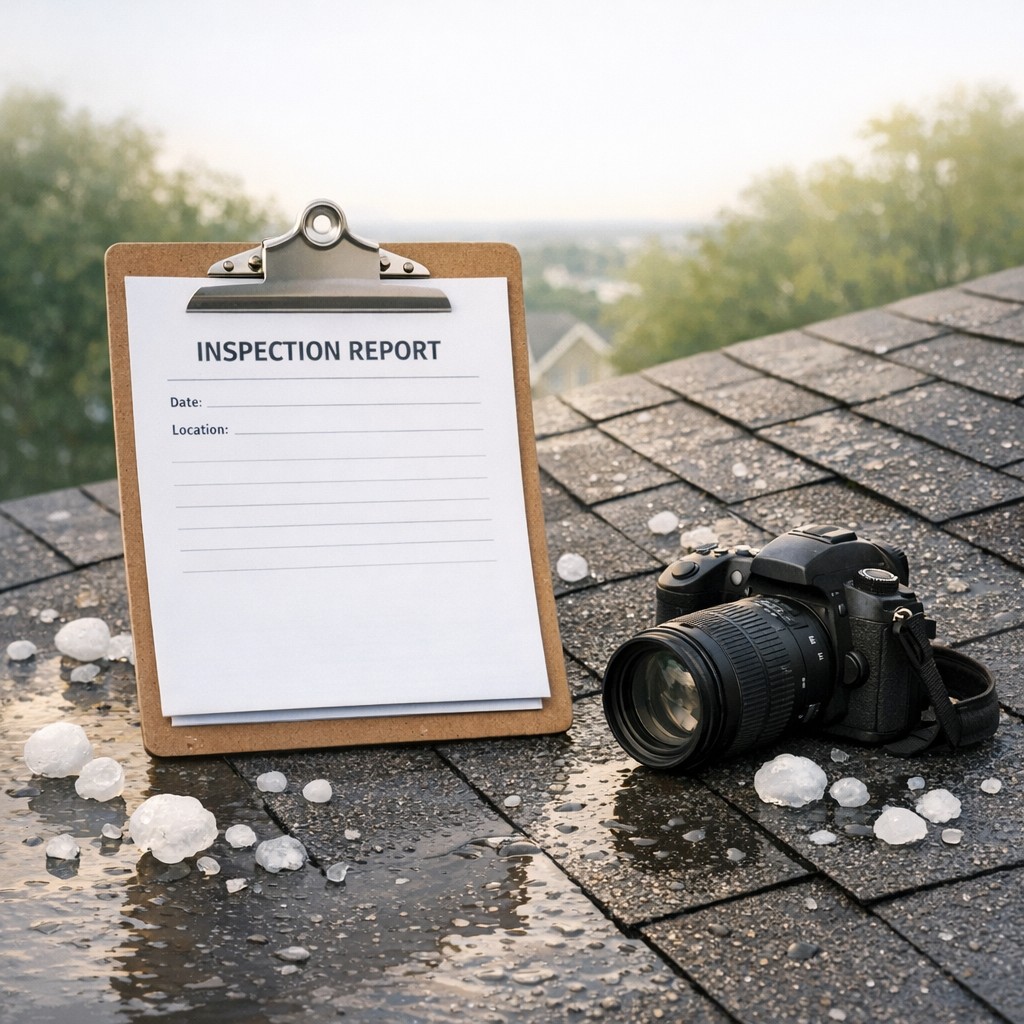
Safety comes first. Wait until hail activity stops and conditions are secure. Photograph every accessible area showing damage — siding, windows, gutters, fences, and outdoor systems. Use timestamp features or apps recommended by the Insurance Institute for Business & Home Safety (IBHS). Accurate timestamps prove that damage occurred during the storm event.
The Federal Emergency Management Agency (FEMA) urges homeowners to log each image in a secure digital folder. Minnesota emergency management agencies recommend noting the date and city in every file name. You can see photo-labeling techniques inside the hail documentation guide for Minnesota residents, which simplifies this process.
When to Consult a Hail Damage Lawyer
After initial cleanup, consider consulting a hail damage lawyer if your insurer questions the claim’s validity. These professionals interpret policy language under statutes like Minn. Stat. § 65A.10, governing property loss proof. Their experience helps uphold your rights when insurer findings differ from independent reports.
Hail damage lawyers often work with licensed public adjusters and contractors certified by the Institute of Inspection, Cleaning, and Restoration. As CPCU-certified adjuster Maria Lopez explained in 2024, “Detailed photo sequences and consistent repair estimates often make or break claim acceptance.” Validating your records early reduces the chance of later disputes.
If you need help organizing visual records or inspection reports, refer to contexts outlined in this foundational Minnesota hail damage guide, which covers structure, labeling, and backups.
Step 2: Track Communication and Inspections
Document all contact with insurance representatives. Note call dates, summaries, and decisions. Minnesota’s Department of Commerce suggests retaining all correspondence for at least twelve months after claim settlement. Keeping this paper trail helps your commercial property damage lawyer verify compliance with claim handling rules under state law.
- Use a dedicated notebook or cloud log for communication records.
- Capture adjuster photos side by side with your own.
- Request written explanations for all partial approvals or denials.
- Keep repair invoices and weather reports together.
- Save everything with verifiable timestamps.
This organizational approach ensures that your documentation meets both legal and insurer expectations. The University of Minnesota’s Climate Research Center advises storing multiple copies in different secure locations, recognizing that post-storm stress often causes accidental data loss.
How a Storm Damage Attorney Supports Your Claim
A storm damage attorney focuses on presenting accurate evidence in negotiations or, if needed, litigation. By verifying data sources — such as NOAA weather event summaries for your postal code — attorneys confirm that your damage aligns with documented storm occurrences. This reduces the room for insurer disputes about cause or timing.
Minnesota’s Insurance Information Institute reported in 2024 that 67 percent of policyholders who prepared organized photographic and written records received faster settlement approval. It shows how accurate documentation combined with timely legal advice turns a reactive crisis into a structured recovery plan.
You can also draw from detailed image cataloging concepts outlined in key principles explained here. Integrating those methods alongside professional legal review strengthens both credibility and claim durability.
Case Example: From Chaos to Clarity
One composite example: A Twin Cities homeowner faced insurer pushback after a 2023 hailstorm. By compiling over 200 timestamped photos and certified roof inspection data, their attorney demonstrated consistent impact patterns matching NOAA storm logs. Their claim settled within eight weeks — proof that methodical evidence under expert guidance can accelerate fair outcomes.
Practical Checklist for Property Owners
If you’re a property owner or storm-impacted household starting your evidence folder today, here are key steps:
- Photograph all visible hail impacts immediately after safe conditions.
- Label images with date, time, and specific location.
- Collect professional estimates from licensed contractors.
- Retain communication logs and adjuster reports.
- Save copies in multiple formats — digital and paper.
- Contact a qualified hail damage attorney if any coverage question arises.
- Reference Minnesota’s consumer protection laws when reviewing insurer responses.
These steps not only protect your financial stability but also give you confidence amid post-storm uncertainty. Many homeowners describe the process as empowering once they see organization replacing chaos.
Moving Forward with Confidence
Storm damage recovery is not only about repairs; it’s about agency. Every detailed note, calibrated photo, and preserved invoice restores a sense of control. Whether handled independently or supported by a legal professional, accurate hail documentation remains your best safeguard.
For step-by-step visuals, review insights from Minnesota homeowners: Hail damage documentation checklist. It complements the strategies in this piece, connecting clarity with compassion for every policyholder affected by severe weather.
Additional Resources
For more information and support resources, visit our Resources Page.
References
Federal Emergency Management Agency (FEMA). (2023). Post-Storm Household Safety Recommendations. Retrieved from https://www.ncei.noaa.gov/stormevents/
Insurance Institute for Business & Home Safety (IBHS). (2024). Residential Roof Damage Assessment Guidelines. Retrieved from https://www.lionstarroofing.com/hail-damage-to-roofing-recognition-documentation-and-repair/
Minnesota Department of Commerce. (2024). Insurance Claim Handling Standards. Retrieved from https://mn.gov/commerce/insurance/auto/storm-damage.jsp
National Weather Service Twin Cities Office. (2023). Hail Event Summary Data – Twin Cities Region. Retrieved from https://www.ncei.noaa.gov/stormevents/
Insurance Information Institute. (2024). Hail Claim Trends and Consumer Outcomes. Retrieved from https://www.ccexteriors.com/storm-damage/insurance-claims/
University of Minnesota Climate Research Center. (2023). Data Preservation and Environmental Verification Practices. Retrieved from https://www.wensmanncontractors.com/the-minnesota-homeowners-guide-to-storm-damage-claims/